Cluster Porosity In Welding . You may have a doubt now, what is meant by random porosity and isolated porosity Porosity is the presence of cavities in the weld metal caused by the freezing in of gas released from the weld pool as it solidifies.
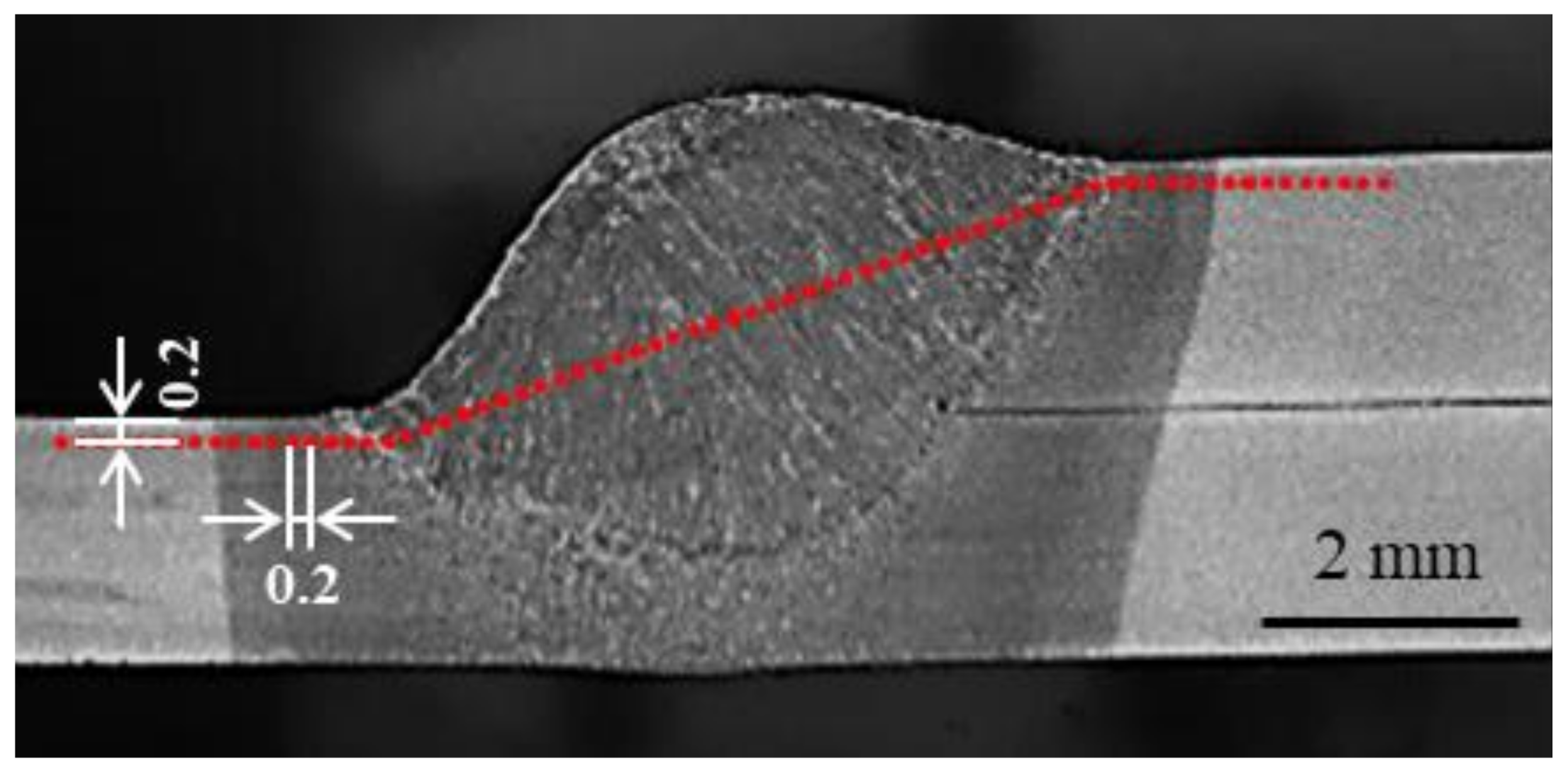
Metals Free Full Text Effect Of Porosity On The Fatigue Behavior Of Gas Metal Arc Welding Lap Fillet Joint In Ga 590 Mpa Steel Sheets Html from www.mdpi.com The moisture turns into gas when heated and becomes trapped in the weld during the welding process. The aggregate length of cluster porosity in any continuous 300 mm length of weld exceeds 13 mm. Where t is the thickness of the weld excluding reinforcement. Porosity is generally spherical but may be cylindrical. Lack of fusion weld defect occurs when the filler metal doesn't fuse correctly with the base metal.
Luckily, porosity is a defect that has an approximate 90 percent prevention rate. When porosity is seen in the weld face, it is also referred to as pit.' Cluster porosity is caused when flux coated electrodes are contaminated with moisture. Cluster porosity appear just like regular porosity in the radiograph but the indications will be grouped close together. Porosity can occur individually or it may occur in groups also (mostly), group of porosity is known as cluster porosity. Cluster porosity appears just like regular porosity in the radiograph but he indications will be grouped close together. The diameter of the cluster exceed 13 mm.
Source: imgv2-2-f.scribdassets.com Cluster porosity is caused when flux coated electrodes are contaminated with moisture. The moisture turns into gas when heated and becomes trapped in the weld during the welding process. You may have a doubt now, what is meant by random porosity and isolated porosity
Porosity is of five types mainly, these are; The moisture turns into a gas when heated and becomes trapped in the weld during the welding process. The moisture turns into a gas when heated and becomes trapped in the weld during the welding process.
Luckily, porosity is a defect that has an approximate 90 percent prevention rate. This creates an erratic arc. Porosity is generally spherical but may be cylindrical.
Source: ars.els-cdn.com Porosity is generally spherical but may be cylindrical. In a radiographic image these defects appear as straight lines between This moisture on the surface of the welding metal turns into the gas when the temperature rises and becomes trapped in the weld pool when you start welding the surface.
Lesser of 25mm or 2t whichever is lesser, where 2 or 3 clusters are present , the sum of clusters shall not exceed 25 mm in a length of 150mm. Cluster porosity in welding can be quite easy to avoid. Porosity is generally spherical but may be cylindrical.
In a radiographic image these defects appear as straight lines between When porosity is seen in the weld face, it is also referred to as pit.' The moisture turns into a gas when heated and becomes trapped in the weld during the welding process.
Source: www.kobelco-welding.jp Cylindrical or elongated porosity is also referred to as piping porosity or wormhole. other types are cluster porosity, which is a localized group of pores, and linear porosity, in which a number of pores are aligned. Piping porosity is described as cavities longer than their width, generally at right angle from the weld face. Cluster porosity has pores grouped locally with irregular distribution, deriving frequently from faulty start or stop of welding arc, or from arc blow.
When porosity is seen in the weld face, it is also referred to as pit.' With a few tips for identifying possible causes of the porosity, a welder quickly can turn reject parts into weldments that are acceptable under most welding codes. Cluster porosity happens when flux coated electrodes are contaminated by moisture.
Porosity is generally spherical but may be cylindrical. Porosity, cluster porosity, roughness and contour. Porosity is of five types mainly, these are;
Source: i0.wp.com Luckily, porosity is a defect that has an approximate 90 percent prevention rate. In a radiographic image these defects appear as straight lines between Luckily, porosity is a defect that has an approximate 90 percent prevention rate.
Porosity is often classified into types based on its shape and distribution within the weld. Porosity, cluster porosity, roughness and contour. Porosity is of five types mainly, these are;
In a radiographic image these defects appear as straight lines between The porosity can take several forms: Parveen kumar on welding defects;
Source: reader012.staticloud.net Cylindrical or elongated porosity is also referred to as piping porosity or wormhole. other types are cluster porosity, which is a localized group of pores, and linear porosity, in which a number of pores are aligned. Where t is the thickness of the weld excluding reinforcement. The moisture turns into a gas when heated and becomes trapped in the weld during the welding process.
This moisture on the surface of the welding metal turns into the gas when the temperature rises and becomes trapped in the weld pool when you start welding the surface. Lack of fusion weld defect occurs when the filler metal doesn't fuse correctly with the base metal. One of the easiest ways of avoiding porosity is taking precautions that all welders need to be practicing.
Cluster porosity and porosity weld defect occur due to the presence of moisture, which turns into gas that will be further trapped in the weld when heated. The moisture turns into a gas when heated and becomes trapped in the weld during the welding process. Consequently, it leaves rounded holes outside the weld area and can also take the form of elongated holes which are known as wormholes that refers to a large amount of gas being trapped inside the weld bead.
Source: www.totalmateria.com In a radiographic image these defects appear as straight lines between Porosity looks sponge like or like tiny bubbles in the weld. Cluster porosity appear just like regular porosity in the radiograph but the indications will be grouped close together.
Porosity, cluster porosity, roughness and contour. Uniformly distributed porosity, in this type, pores are distributed uniformly in the welding area. The moisture turns into a gas when heated and becomes trapped in the weld during the welding process.
This creates an erratic arc. Luckily, porosity is a defect that has an approximate 90 percent prevention rate. Cluster porosity appears just like regular porosity in the radiograph but he indications will be grouped close together.
Thank you for reading about Cluster Porosity In Welding , I hope this article is useful. For more useful information visit https://labaulecouverture.com/

Post a Comment for "Cluster Porosity In Welding"